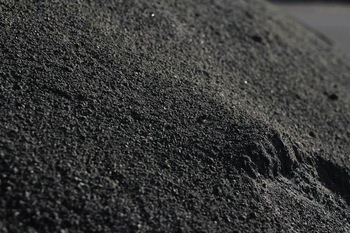
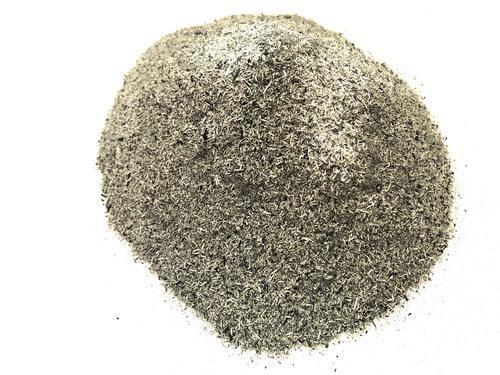
Product Description
Rice husks (Rice hulls) are the hard protecting coverings of grains of rice. In addition to protecting rice during the growing season, rice hulls can be put to use as building material, fertilizer, insulation material, or fuel. Rice husks are the coatings of seeds & grains rice. The husk protects the seed during the growing season, since it is formed from hard materials, including opaline silica and lignin. The hull is mostly indigestible to humans.
We are Leading Manufacturer of Rice Husk Ash in India.
Versatile Industrial ApplicationsRice Husk Ash is highly acclaimed in the construction and cement industry for its exceptional pozzolanic reactivity. Acting as a filler in high-strength concrete, it boosts the compressive strength and longevity of cementitious products. Its amorphous structure and high silica content make RHA an irreplaceable ingredient in refractory materials, ceramics, and other industrial applications, enhancing both structural and functional qualities.
Superior Chemical and Physical PropertiesWith a purity of up to 97% silica and minimal loss on ignition, RHA offers a lightweight yet stable solution for industrial use. The fine powder's insolubility in water, low water content, and stable shelf life make it ideal for long-term storage and transportation. Its particle fineness allows for excellent integration into various material matrices, ensuring reliable results in each application.
FAQ's of Rice Husk Ash:
Q: How is Rice Husk Ash produced for industrial uses?
A: Rice Husk Ash is generated through the controlled combustion of rice husks, typically at temperatures that ensure a high yield of amorphous silica. The result is a fine powder with particle sizes less than 75 microns-suitable for use in cement, construction mixtures, and various industrial processes.
Q: What makes Rice Husk Ash beneficial in concrete and cement production?
A: The pozzolanic activity of Rice Husk Ash enables it to react with lime or cement, improving the strength, durability, and impermeability of concrete. Its high silica content helps fill micro-pores, reducing permeability and enhancing mechanical properties in the finished product.
Q: When and where should Rice Husk Ash be stored to retain its quality?
A: Rice Husk Ash should be stored in a cool, dry location to prevent any moisture absorption or contamination. Under these recommended conditions, it remains stable and effective throughout its shelf life.
Q: What applications does Rice Husk Ash have in industrial sectors?
A: RHA is used extensively as a pozzolanic material in cement, as a filler in high-strength concrete, and as a source of silica in ceramic and refractory manufacturing. Its versatility extends to use in other sectors requiring amorphous silica.
Q: How does the fine particle size of Rice Husk Ash influence its industrial performance?
A: With particles smaller than 75 microns, Rice Husk Ash thoroughly disperses within mixtures, improving blending, reactivity, and the mechanical integrity of materials such as concrete and refractories.
Q: What are the main benefits of using Rice Husk Ash in construction materials?
A: Rice Husk Ash enhances compressive strength, reduces heat of hydration, and improves long-term durability in construction materials, all while utilizing a renewable agricultural byproduct.